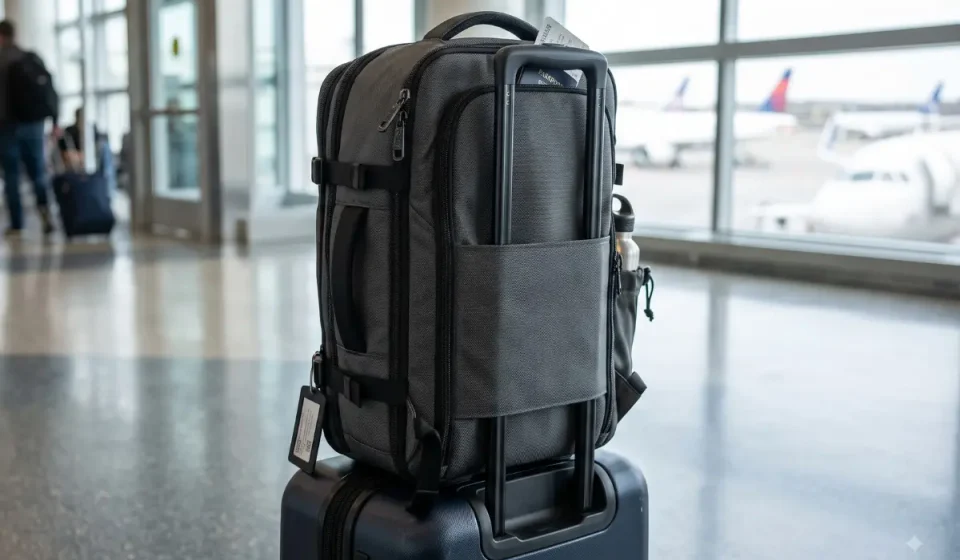
How to Select the Best Travel Backpack for Carry-On Storage

Whether you are going on a weekend trip, an international trip, or a family vacation, luggage is always a major concern. That said, choosing the right backpack can make air travel much easier. For travellers trying to avoid checked-baggage fees, a well-designed carry-on backpack is perfect for keeping belongings organised and accessible. However, finding the best travel backpack is not simply about choosing the one that looks good. You should also consider other factors like size, weight, storage layout, durability, and airline restrictions, which can affect your choice for carry-on luggage. So, without further ado, let us find out how to select a best travel backpack for carry-on storage.
Benefits of Choosing the Right Carry-On Travel Backpack
Your backpack stays with you throughout your journey, from travelling to the airport to reaching your accommodation. Some travellers need space for clothes and electronics, while others prioritise a compact and lightweight backpack that suits their style. That said, choosing the wrong bag can lead to discomfort, poor organisation, or issues while boarding. The perfect carry-on backpack provides many advantages, and some of them include:
Facilitates mobility
When compared with wheeled luggage, a backpack offers ease of mobility. You can easily carry it on stairs, on public transport, and on busy airport and city streets while keeping your hands free. And when you have to carry the bag for extended periods, your main priority should be comfort. So, it is better to opt for padded shoulder straps and a supportive back panel, as they can distribute the load more comfortably.
Offers better organisation
A good travel backpack offers better organisation with separate pockets for clothes, electronics, documents, chargers, and smaller accessories. Thus, you do not need to search through one large compartment, as your frequently used items are easy to reach.
Helps save baggage fees
When you travel with only carry-on luggage, you can avoid checked-baggage charges, depending on the airline. However, a carry-on-sized backpack is not accepted by every airline. Always remember that airline dimensions and weight limits vary.
Allows faster airport travel
You are required to check a bag before departure or wait at baggage claim after arrival. However, when you opt for carry-on-only travel, it can also save time. For short trips, the right backpack can make packing and moving between destinations simpler.
What Size Travel Backpack Is Best for Carry-On Luggage?
No single backpack capacity is perfect for every traveller or airline. While 20L to 30L backpacks are best for light packers, the one within the range of 30L-35L is a versatile choice. Mostly, 30L to 40L backpacks offer excellent storage capacity and portability. Capacity in litres should be an indicator of storage space, but that doesn’t mean that a bag qualifies as carry-on luggage. Here is a guide to selecting the best size of backpack for carry-on luggage:
20L–30L
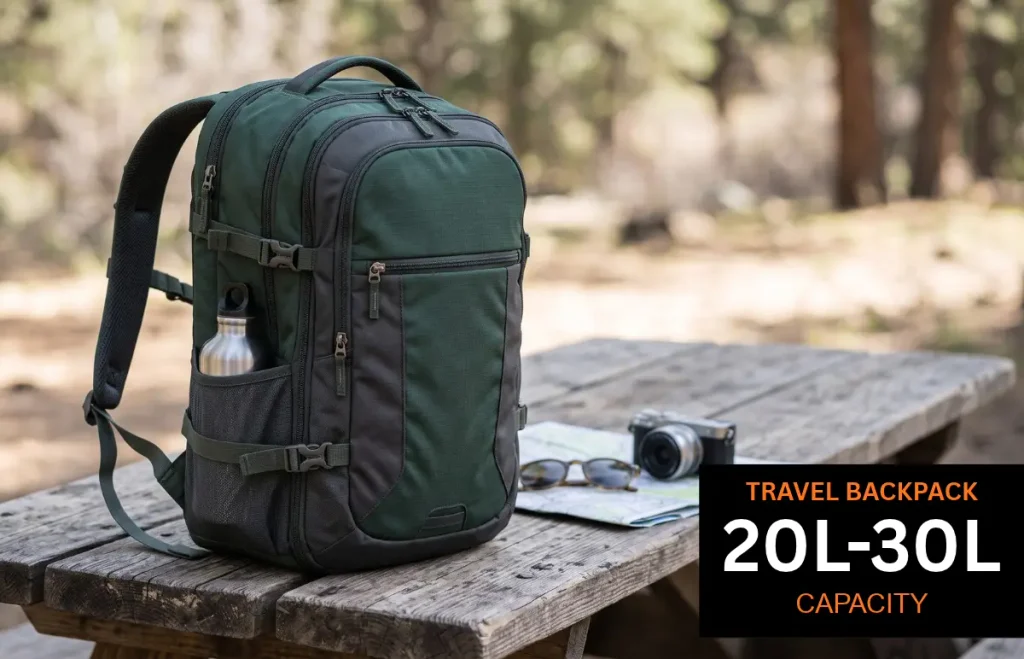
A 20L to 30L backpack is perfect for minimalist travellers who prefer overnight or weekend trips. Moreover, it is a favourite among travellers carrying only essential clothing and electronics, especially for warm-weather destinations. These bags are not only easier to carry but also don’t allow you to overpack.
30L–35L
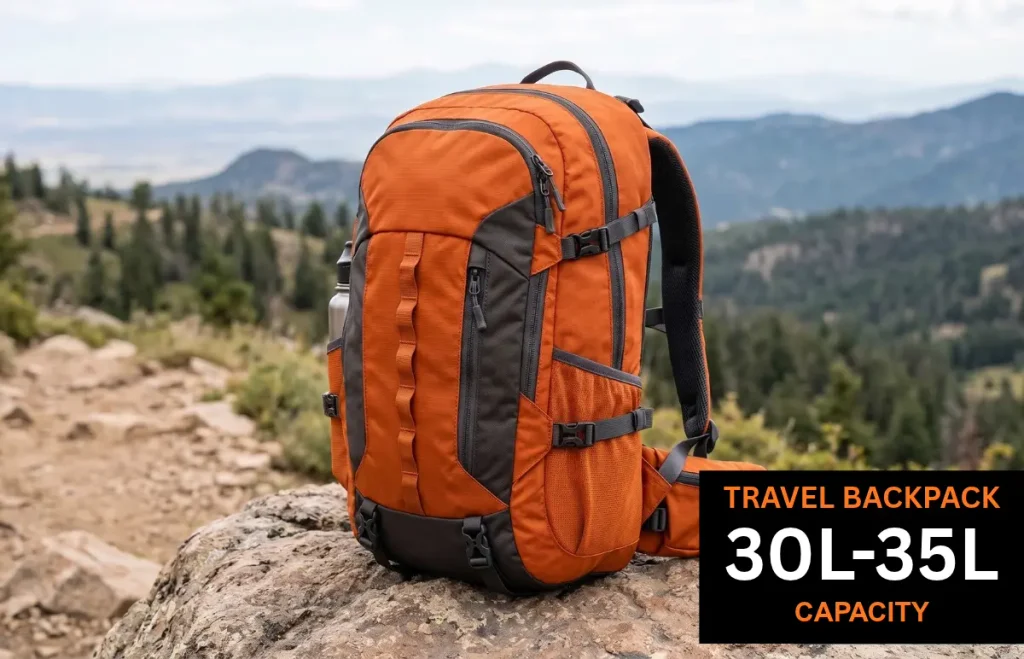
A 30L to 35L backpack offers more packing space and is easy to manage. These bags are suitable for several-day trips, especially when you are travelling with lightweight clothing. So, if you are looking for the best lightweight backpack for travel, this size range offers a good capacity and overall bag weight.
35L–40L
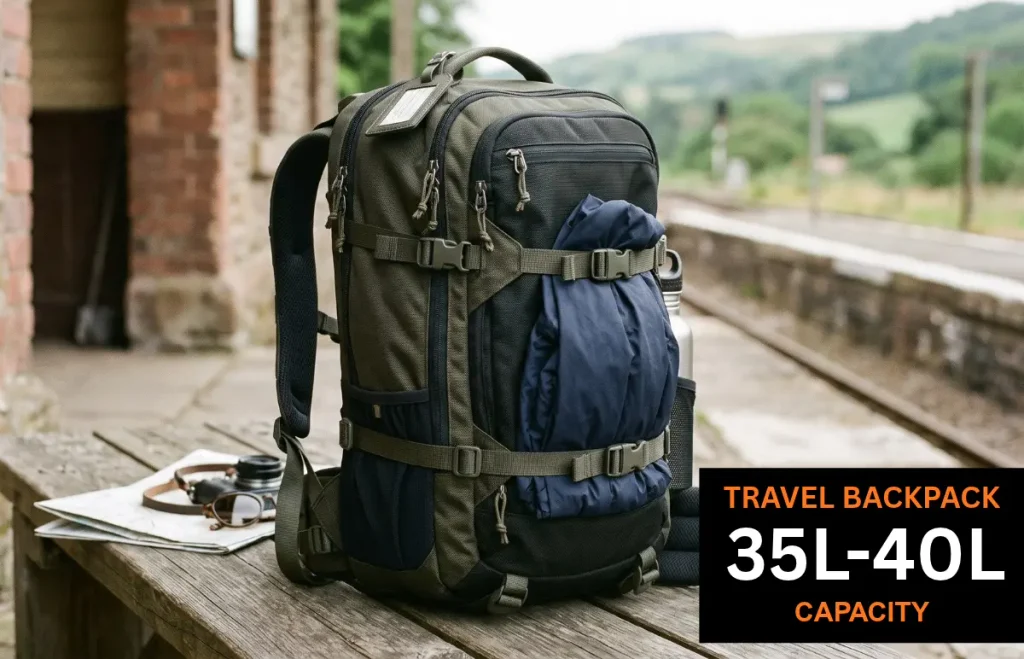
There is no denying that larger bags are easier to overpack. A 35L to 40L backpack is perfect for travellers who need extra clothing, footwear, electronics, or cold-weather items. However, sometimes even if the backpack’s dimensions are accepted by the airline, its packed weight could exceed the permitted cabin baggage allowance.
What Features Should You Look for in a Travel Backpack?
The best travel backpack is a perfect blend of comfort, durability, and a design that suits your travel style.
1. Lightweight
The weight of your empty backpack reduces the amount of belongings you can carry within the weight range allowed by the airline. A lightweight bag is perfect for travelling in airlines that allow low cabin baggage weight limits. However, rather than just opting for low weight, you should also focus on the durability of the backpack. So, buy a bag made of sturdy materials and with a lightweight construction.
2. Comfortable shoulder straps
Wide, padded, adjustable shoulder straps make carrying a fully packed bag easier. The straps should be so comfortable that they do not dig into your shoulders. Larger travel backpacks sometimes come with a hip belt to transfer some of the load away from the shoulders.
3. Supportive back panel
A padded back panel provides comfort and some structure to the backpack. Moreover, the mesh designs, ventilation channels, or raised padding improve airflow between the backpack and your back. The backpacks with a supportive back panel can be useful when walking long distances or travelling in warm climates.
4. Clamshell opening
While traditional backpacks often open only from the top, travel backpacks use a clamshell design that opens more like a suitcase. This allows you to see and access your belongings without removing everything from the bag. This feature is particularly convenient for travellers who frequently pack clothes in their backpack.
5. Laptop compartment
A dedicated padded compartment is suitable if you travel with a laptop or tablet, as it provides some protection from the bottom and sides of the bag while allowing easy access at airport security when necessary.
6. Useful internal compartments
Look for useful storage features, including zipped internal pockets, document compartments, mesh dividers, small accessory pockets, external quick-access pockets, and dedicated electronics storage. However, the layout should match what you actually carry.
7. Compression straps
Compression straps allow you to tighten the backpack after packing and reduce bulk. However, compression cannot make an oversized rigid bag comply with an airline’s dimensional limit.
8. Durable zippers and materials
Travel bags are frequently opened, closed, placed on floors, and squeezed into storage spaces. So, look for durable fabric and good-quality zippers.
9. Lockable zippers
Some travel backpacks come with zipper pulls to accommodate a small luggage lock. This becomes practical, especially when travelling on public transport or leaving luggage in shared storage areas.
10. Secure water bottle pocket
A secure bottle pocket can be useful during airport transfers, sightseeing, and long journeys. So, you should check whether the pocket is usable when the backpack is fully packed.
Quick Comparison: Carry-On Travel Backpack Sizes
| Backpack Size | Best For | Typical Trip Length | Main Advantage | Things to Consider |
| 20L–25L | Minimalist travellers and short trips | 1–2 days | Lightweight and easy to carry | Limited room for extra clothes or shoes |
| 25L–30L | Weekend trips and light packers | 2–4 days | Good balance of portability and storage | May be small for bulky clothing |
| 30L–35L | Regular travellers and city breaks | 3–5 days | Versatile size with useful packing space | Check packed dimensions against airline limits |
| 35L–40L | Longer trips and one-bag travel | 4–7+ days | More room for clothes and electronics | Easier to overpack or exceed weight limits |
| 40L+ | Travellers needing substantial storage | Longer trips | Maximum packing capacity | May exceed some airlines’ carry-on restrictions |
Is a 40L Backpack Allowed as Carry-On Luggage?
A 40 L backpack is generally accepted as carry-on luggage, but the capacity alone does not determine whether it is allowed. Airlines generally assess cabin baggage according to external dimensions and weight. That said, two backpacks of 40L can have very different shapes and measurements.
A soft-sided 40L backpack with the airline’s permitted dimensions can be carried as cabin baggage. If you regularly fly with different airlines, you should choose a slightly smaller backpack to provide more flexibility. Before flying with a 40L backpack, consider these factors:
- Measure its height, width, and depth when packed.
- Check the airline’s current cabin-baggage dimensions.
- Weigh the fully packed backpack.
- Include protruding handles, pockets, and other fixed parts when considering dimensions.
- Avoid overpacking until the bag becomes deeper than its stated measurements.
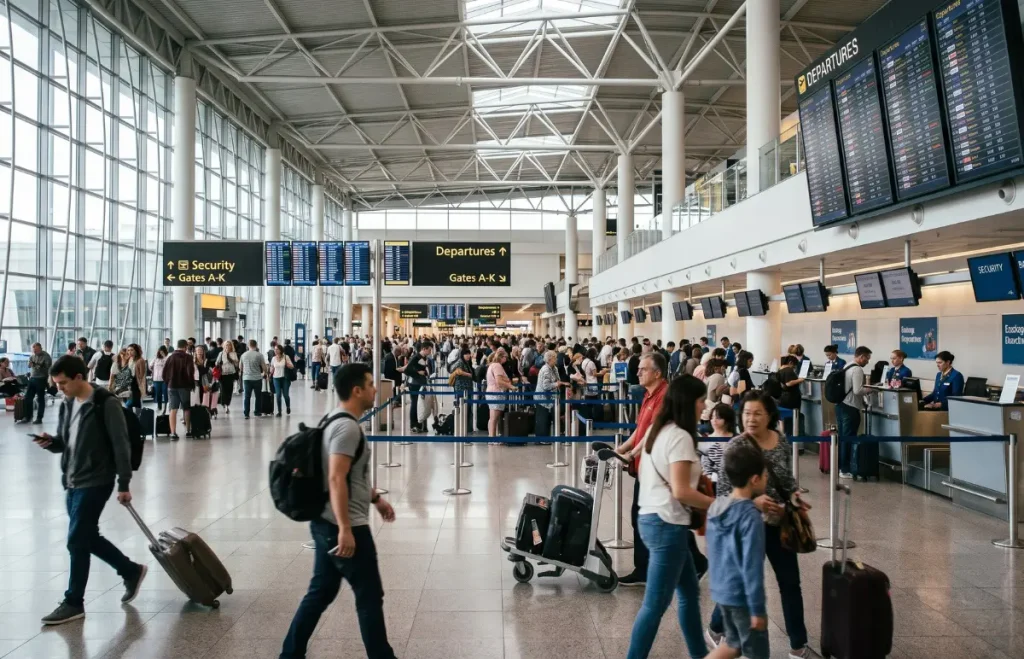
Check Airline Carry-On Size and Weight Restrictions
You should always check your airline’s current baggage policy before buying a backpack or leaving for the airport. There is no universal carry-on allowance. Permitted dimensions, weight, number of bags, and personal-item rules can vary between airlines, routes, cabin classes, and ticket types. Some airlines allow a standard cabin bag, while certain fares may include only a small bag that fits under the seat.
So, compare the backpack’s external measurements with the airline’s stated maximum dimensions. A lightweight backpack gives you more usable weight for your belongings and can be valuable for frequent flyers. Do not assume that every ticket includes the same baggage allowance and always check the allowance associated with your specific booking. Airline baggage policies can change, so check the official airline website shortly before departure.
Common Mistakes to Avoid When Buying a Carry-On Backpack
Selecting the best travel backpack for carry-on storage requires balancing capacity, dimensions, weight, comfort, organisation, and durability. For many travellers, a 30L to 40L backpack offers enough room for essentials. However, litres alone do not indicate whether a backpack will be accepted onboard. So, you should always compare its packed dimensions and weight against the requirements of your airline and specific fare. Here are some of the common mistakes that you should avoid when buying a carry-on backpack:
- A 30L backpack is not automatically suitable for every airline. You should always check external dimensions rather than choosing the backpack solely based on its capacity.
- Compare empty weights when evaluating similar bags, as a heavily structured backpack can consume a large portion of your baggage allowance before you pack anything.
- Do not opt for a large bag, as it can become uncomfortable and may exceed airline weight once completely filled. Choose enough space for your normal packing needs rather than buying the biggest backpack available.
- Thin straps, insufficient padding, and poor weight distribution can become uncomfortable if you have to walk through airports or carry the bag around a city.
- You should not assume that there is a single worldwide carry-on standard. A bag that meets one airline’s requirements could be a problem for another airline.
- While packing, ensure that passports, boarding documents, headphones, chargers, and other essentials are easy to reach.
- Do not prioritise too many features, such as extra compartments, thick padding, and large hip belts, as they can increase weight and bulk. Instead, choose features that are practical for your trips, as more features do not always mean a better backpack.
Final Thoughts
Whether you want the best backpack for travel on longer trips or a lightweight backpack for travel for quick getaways, you should look for a comfortable design that provides enough storage without encouraging unnecessary packing. The perfect carry-on backpack can make airport transfers easier, reduce luggage hassles, and help keep everything conveniently within reach. So, which backpack did you like the best? Let us know.
Frequently Asked Questions (FAQs)
For many travellers, a backpack of around 30L to 40L provides enough storage. However, you should choose based on the backpack’s actual dimensions and your airline’s carry-on restrictions rather than capacity alone.
Yes, some 40L backpacks can be used as carry-on luggage, provided their packed external dimensions and weight remain within the airline’s limits.
A 30L backpack can be enough for a weekend or several-day trip, especially for travellers who pack lightly. It can also be easier to carry and less likely to become heavy.
Yes. A lightweight backpack can be useful for air travel because airlines impose cabin-bag weight limits.
Some of the useful features to consider include comfortable padded straps, a supportive back panel, durable materials, a clamshell opening, compression straps, accessible compartments, and a padded laptop sleeve.