Fitness Gear Advanced Power Band Kit: Benefits, Uses and Buying Guide

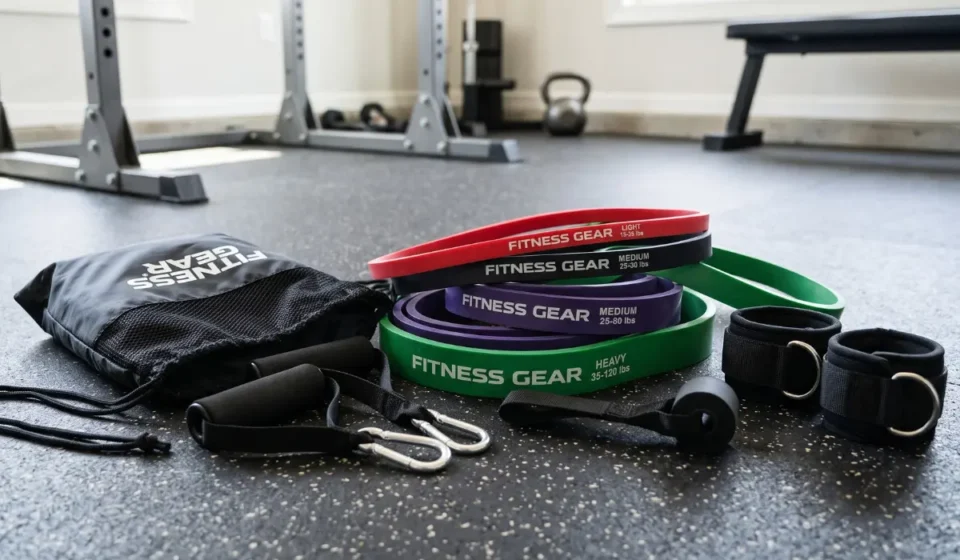
Building strength at home does not always require heavy dumbbells, weight plates, or bulky exercise machines. You can use resistance bands that offer a compact and versatile alternative for strength training, stretching, mobility work, and full-body workouts. The fitness gear advanced power band kit provides different levels of resistance, making it useful for beginners as well as more experienced fitness enthusiasts.
A fitness gear power band kit can be used to perform upper-body, lower-body, core, mobility, and rehabilitation-style exercises. Because resistance bands are lightweight and easy to store, they can also be practical for people who exercise at home or want portable workout equipment.
What Is the Fitness Gear Advanced Power Band Kit?
The fitness gear advanced power band kit is a resistance-training system that helps users perform a variety of strength and conditioning exercises. Power bands are made from strong elastic material that creates increasing resistance as the band stretches. Depending on how a band is positioned and stretched, the amount of resistance can gradually increase through the movement.
The compact design is convenient for users who do not have enough space for a complete home gym. A power band kit may be useful for:
- Strength and resistance training
- Full-body home workouts
- Warm-ups and stretching
- Mobility exercises
- Assisted bodyweight exercises
- Sports conditioning
- Lower-body activation exercises
- Adding resistance to familiar movements
Key Features of the Fitness Gear Advanced Power Band Kit
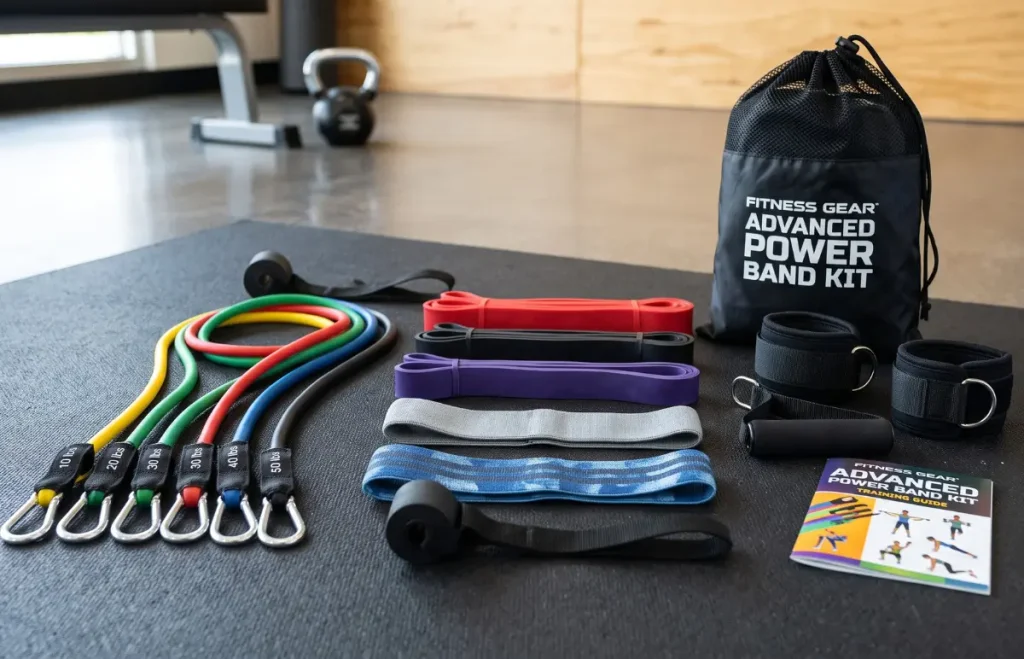
Before buying resistance bands, it is important to understand what makes a kit practical for everyday workouts. While exact contents and specifications can vary by product version, these are some of the main features to consider.
Multiple resistance options
A good power band kit provides different resistance levels. Lighter resistance can be useful for stretching, warm-ups, shoulder exercises, and beginners, while heavier bands can provide greater challenge for strength-focused movements. Having several resistance choices also makes progressive training easier. As an exercise becomes less challenging, users can move to a stronger band or modify the setup to increase resistance.
Versatile exercise options
Power bands can be used for a wide variety of exercises instead of being limited to one muscle group. Depending on the band and setup, users can target their chest, back, shoulders, arms, core, glutes, quadriceps, and hamstrings. This versatility makes resistance bands particularly useful when building a compact home workout setup.
Compact and portable design
One major advantage of resistance bands is portability. They take up considerably less room than conventional gym equipment and can generally be stored in a drawer, closet, gym bag, or other small space. They can also be convenient for travel because users can perform many exercises without carrying heavy weights.
Suitable for different training levels
Different resistance options allow a band kit to accommodate a range of fitness levels. Beginners can start with manageable resistance and focus on technique, while experienced users can select stronger resistance or incorporate bands into more challenging exercises.
Progressive resistance
Resistance generally increases as an elastic band stretches farther. This can make the later portion of certain movements more challenging. Users can also modify the difficulty by changing bands, adjusting their grip, altering band length, or changing their distance from a secure anchor point.
Benefits of Using a Power Band Kit for Strength Training
Resistance bands have become popular because they combine versatility with a simple design. Here are some of the biggest benefits of using them for strength training:
1. Supports full-body strength training
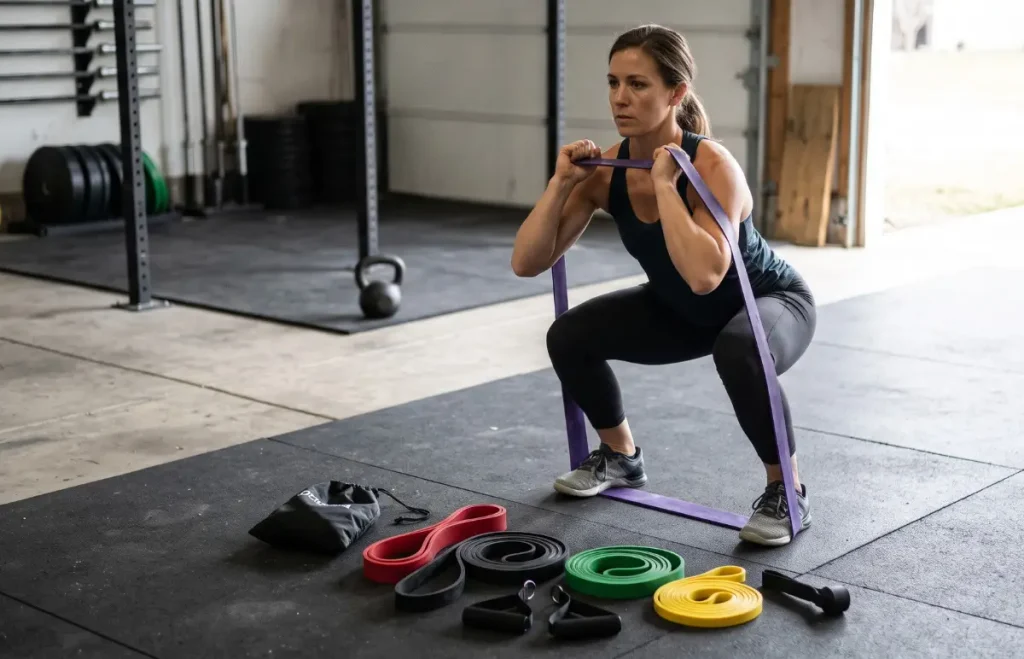
A fitness gear power band kit can help train most major muscle groups. Rows can target the back, curls can work the biceps, squats can challenge the lower body, and presses can engage the chest and shoulders. This means one compact set can support a varied exercise routine.
2. Makes home workouts more convenient
A lack of space can make traditional home gym equipment impractical. Resistance bands require relatively little storage space and can be set up quickly for many exercises. They are therefore suitable for bedrooms, apartments, home gyms, and other limited workout spaces.
3. Offers adjustable workout intensity
Users can increase or decrease exercise difficulty by selecting a different band or adjusting the band’s starting tension. This makes power bands useful for progressive workouts. Beginners can gradually increase resistance instead of immediately working with heavy loads.
4. Adds variety to regular exercises
Resistance bands can make familiar exercises feel different. For example, they can be added to squats, glute bridges, rows, presses, and other movements to change how resistance is applied. Exercise variety can also make a home training program more engaging.
5. Easy to carry while traveling
Resistance bands are much easier to transport than dumbbells or kettlebells. A compact band kit can fit into many travel or gym bags, allowing users to continue exercising when away from their usual workout space.
6. Useful for warm-ups and mobility work
Lighter bands can be incorporated into dynamic warm-ups and mobility exercises. They are commonly used for shoulder movements, lower-body activation, and controlled stretching. People using bands as part of injury rehabilitation should follow guidance from a qualified healthcare or rehabilitation professional.
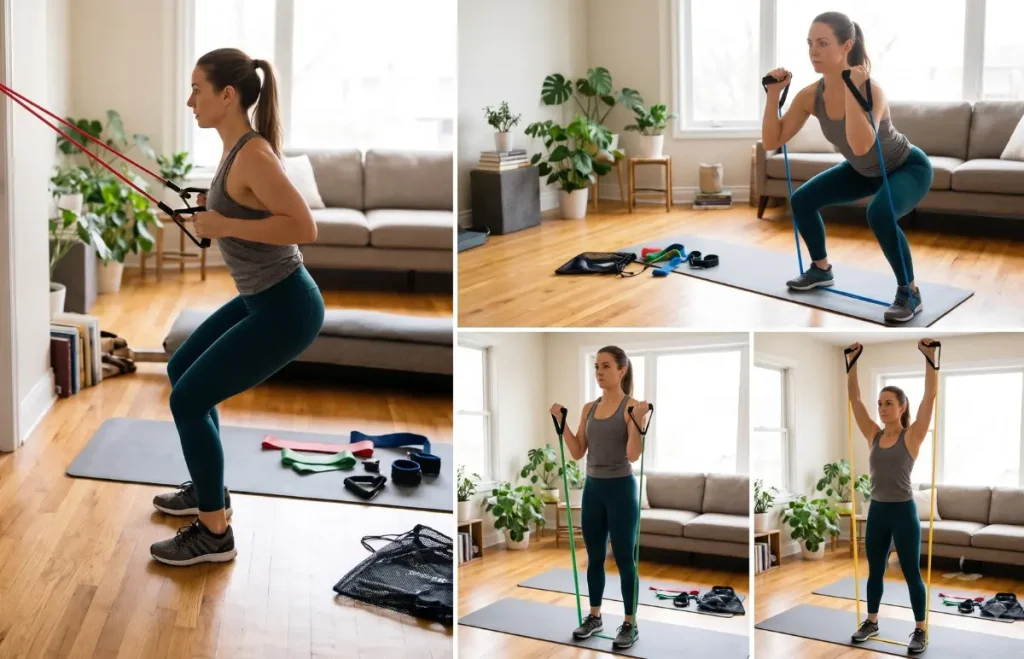
How to Use a Power Band Kit for Home Workouts
If you are wondering how to use a power band kit for your home workouts, here is a simple guide to make your fitness regimen easier:
- Using a fitness gear advanced power band kit at home can be straightforward, but proper setup is important.
- Start by selecting a resistance level that allows you to maintain controlled technique. Beginners should generally prioritize proper form rather than choosing the strongest available resistance.
- Before each workout, inspect the band for cracks, cuts, thinning, discoloration, or other signs of deterioration. Damaged bands should not be used because they may snap under tension.
- When anchoring a band, use a secure attachment point that is appropriate for resistance-band training. Avoid attaching bands to unstable furniture, sharp surfaces, or objects that could move unexpectedly.
- Perform each repetition with controlled movement rather than allowing the band to snap back quickly. Maintaining control during both the stretching and returning phases of an exercise can improve technique and reduce unnecessary risk.
- A simple home routine could include squats, rows, chest presses, shoulder presses, curls, and core movements. Beginners can start with a manageable number of repetitions and gradually increase the workload as their strength and technique improve.
Quick Comparison of Power Band Resistance Levels
| Resistance Level | Best For | Common Exercises |
| Light | Beginners, warm-ups, and mobility | Pull-aparts, shoulder exercises, stretching |
| Medium | General fitness and strength training | Curls, rows, presses and squats |
| Heavy | Experienced users and stronger muscle groups | Squats, deadlifts and heavy rows |
| Extra Heavy | Advanced resistance training | Lower-body and assisted strength exercises |
How to Choose the Right Resistance Band for Your Fitness Level
Choosing an appropriate resistance level is important for workout quality and technique. If a band is too light, it may not provide enough challenge, while excessive resistance can make it difficult to maintain proper form. There are numerous fitness band exercises that can be added to your strength-training routine using a resistance band. If you are wondering how to choose the right resistance band for your fitness level, we have got you covered:
Beginners
Beginners should start with light or moderate resistance, and their goal should be to learn correct movement patterns and complete repetitions smoothly. Once the exercise becomes easy with proper form, resistance can gradually be increased.
Intermediate users
Intermediate users should opt for medium or heavy resistance, depending on the exercise. Larger muscle groups such as the legs and back can often handle greater resistance than smaller muscle groups. If you keep several band strengths available, you can adjust resistance for individual exercises.
Advanced users
Experienced exercisers can use heavier bands for demanding strength exercises or combine band training with bodyweight and conventional resistance exercises. Instead of selecting the heaviest option, advanced users should choose resistance according to the specific movement and training goal.
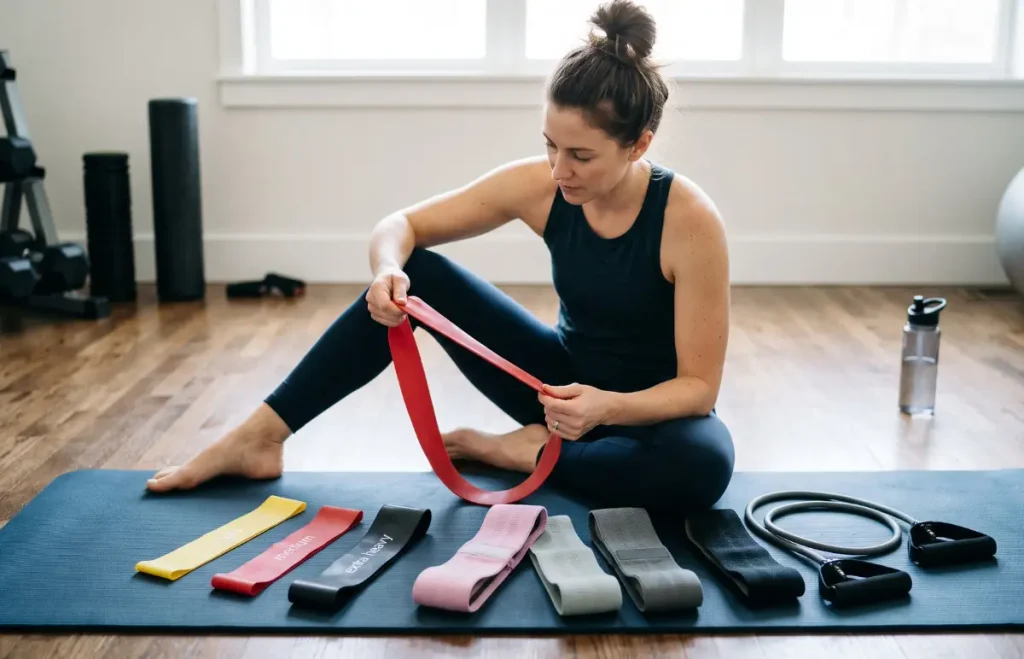
What to Consider Before Buying a Fitness Gear Power Band Kit
Before purchasing a resistance band set, compare more than just the number of bands included. If you wish to buy a fitness gear power band kit, you should consider the following factors to make a better decision:
- Look at the available resistance range. A kit with several resistance levels provides more flexibility as strength improves.
- Material quality and durability of resistance bands are also important because bands are repeatedly stretched during training. Moreover, you should also check the manufacturer’s instructions for care, storage, maximum stretch, and replacement.
- Consider which exercises you wish to perform using the band. Lighter bands are ideal for warm-ups and mobility, while the ones with stronger resistance are used for squats, rows, presses, and lower-body exercises.
- Accessories can also affect usability and make certain workouts easier. Check the package contents, including handles, anchors, straps, or a storage bag, before purchasing because accessories can vary between versions.
- Check recent Fitness Gear Advanced Power Band Kit reviews from verified purchasers where possible. Reviews can provide useful information about long-term durability, comfort, resistance levels, accessories, and ease of use.
Traditional Weights vs. Power Bands
Power bands and free weights are both used for strength training, but they provide different resistance. Power bands are ideal for portability and space-saving workouts, whereas traditional weights are preferable when you need precise external loads and heavier resistance. Many training programs can also use both. For better understanding, let us have a look at the major differences between power bands and traditional weights:
| Feature | Power Bands | Traditional Weights |
| Storage Space | Minimal | Moderate to high |
| Portability | Excellent | Limited |
| Resistance | Changes as band stretches | Based primarily on fixed weight |
| Exercise Variety | High | High |
| Travel Friendly | Yes | Usually no |
| Beginner Friendly | Yes, with appropriate resistance | Yes, with appropriate weight |
| Cost | Often relatively affordable | Can become expensive for multiple weights |
Safety Tips for Fitness Band Exercises
A fitness gear power band kit is useful for home workouts and travel as they are compact, portable, and adaptable to a number of exercises. When choosing a kit, compare resistance levels, material quality, included accessories, intended exercises, and recent customer reviews. Moreover, here are some safety tips for fitness band exercises that you must follow:
- You should always use resistance bands according to the manufacturer’s instructions. Moreover, you should check bands before every session and stop using any band that appears damaged or worn.
- Always keep the band away from sharp edges and rough surfaces to avoid damaging the material. Make sure your hands, feet, and any anchor points are secure before stretching the band.
- Avoid releasing a stretched band suddenly, especially when it is positioned near your face. Controlled movements are safer and useful for maintaining proper exercise technique.
- People with injuries, pain, medical conditions, or specific rehabilitation needs should consult a healthcare professional before beginning a new resistance-training program.
Final words
The fitness gear advanced power band kit is ideal for people who want resistance training without filling their home with large pieces of exercise equipment. From warm-ups and mobility work to full-body strength exercises, you can do everything with these resistance bands. However, you should select resistance that allows you to exercise with controlled, proper technique. Moreover, you should inspect your bands regularly for signs of wear. Do you wish to add the power band kit to your workout regimen? Let us know.
Frequently Asked Questions (FAQs)
A power band kit is suitable for beginners if it has manageable resistance options. If you are a new user, you should start with lighter resistance and focus on correct technique before beginning.
Resistance bands provide enough external resistance to support strength and muscle-building workouts. It is helpful when exercises are performed with appropriate resistance, progression, volume, and consistency.
Yes, you can. Power bands can be used for exercises targeting the legs, glutes, chest, shoulders, back, arms, and core, making them useful for full-body home workouts.
There is no fixed replacement schedule for a resistance band. Its lifespan depends on material, frequency of use, storage, and wear. So, you should inspect bands regularly and replace them when you notice cracks, tears, thinning, loss of elasticity, or other damage.
Power bands are lightweight, portable, and easy to store, while dumbbells provide easier load tracking. However, the better choice depends on your workout goals, available space, and preferred exercises.