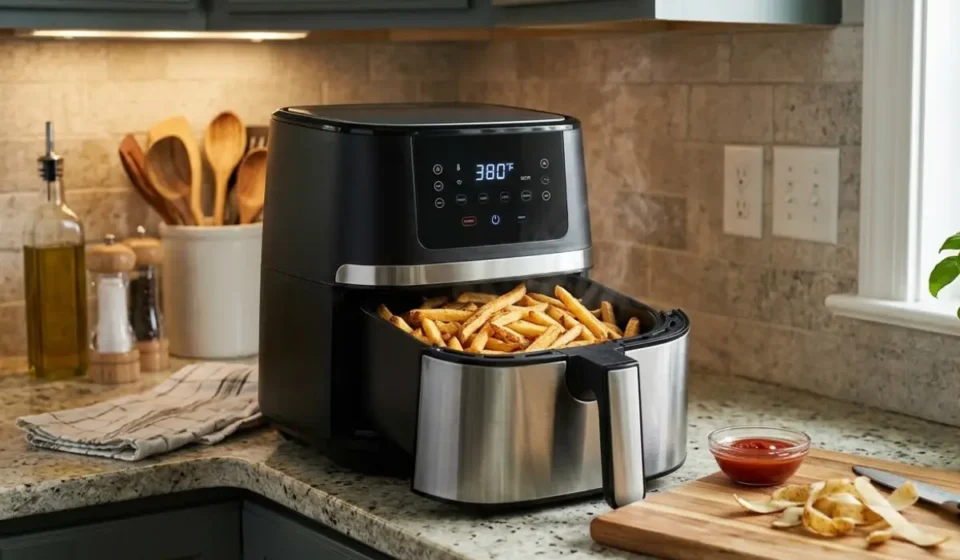
7 Essential Things to Consider When Buying an Air Fryer

Do you want to prepare crispy, delicious meals with less oil but don’t know how? Well, an air fryer is one such kitchen appliance that can help you conveniently cook many meals, from French fries to roasted vegetables and grilled paneer to baked snacks. However, with so many varieties, models, sizes, and features available, choosing the right air fryer for a modern kitchen can feel overwhelming.
Before purchasing an air fryer, you should not only focus on its appearance and advertised features. Instead, capacity, heating performance, ease of cleaning, safety features, and warranty coverage can also affect the use of an air fryer in your kitchen. In this guide, we will discuss the essential factors to consider when buying an air fryer, along with a buying checklist and common mistakes to avoid.
What to Consider When Buying an Air Fryer
Knowing what you want in an air fryer helps you choose a model that fits your cooking habits, household size, kitchen space, and budget. Some air fryers come with basic temperature and timer controls, whereas others offer multiple cooking functions, digital displays, preset programs, and additional accessories. So, let us have a look at the factors to consider before making a purchase:

1. Choose the right air fryer capacity
Capacity plays an important role when purchasing an air fryer. The right choice depends on how many people you cook for, the types of meals you prepare, and how frequently you use the appliance. You will find air fryers with different capacities in the market, ranging from compact models to larger appliances.
Here’s how to choose the right capacity:
- 2–3 litres: Suitable for individuals, couples, and small portions of snacks.
- 3–5 litres: Suitable for small families of two to four people.
- 5–7 litres: Suitable for larger families or for regularly preparing multiple servings.
- 7 litres and above: Suitable for larger households, batch cooking, and bigger portions.
For example, if you prepare fries or evening snacks for two people, a compact air fryer is sufficient. However, if you regularly cook for a family of four or more, an air fryer with a larger capacity can reduce the need to prepare several batches. However, you should also check the shape of the cooking basket, as a wider basket may offer more usable space to arrange food in a single layer for evenly cooked, crispy results.
2. Check the power and heating performance
The power rating of an air fryer can affect its heating capability and how quickly it reaches the desired temperature. The power consumption is measured in watts. When you are comparing models, check the wattage alongside the capacity. A larger appliance needs a heating system that can circulate hot air effectively throughout the cooking chamber.
You should also look for essential features such as consistent heating, effective hot-air circulation, reasonable preheating time, and suitable cooking capacity. If you live in a household where several appliances run simultaneously, consider the air fryer’s rated wattage, plug type, voltage compatibility, and manufacturer’s instructions for safe use.
3. Check temperature and timer controls
Temperature and timer controls allow you to adjust cooking settings according to the recipe. They are especially useful when preparing different foods that require different heat levels and cooking times. Some air fryers have simple manual dials, while others feature digital touchscreens and preset programs.
Look for an adjustable temperature range that accommodates the foods you prepare most often. Many air fryers offer settings from approximately 80°C to 200°C. Moreover, a built-in timer lets you set the cooking duration without continuously monitoring the appliance. Some useful control features that you should consider include:
- Easy-to-read temperature and timer displays.
- Clearly labelled buttons or intuitive manual dials.
- Automatic shut-off when the cooking cycle ends.
- A pause function or removable basket so you can check food safely.
- Shake or turn reminders, where available.
4. Consider the cooking functions you actually need
Modern air fryers come with multiple cooking modes, including air frying, roasting, baking, grilling, reheating, dehydrating, or keeping food warm. While extra functions make an appliance more versatile, not every household needs all of them.
For example, if you mainly want to prepare crispy potatoes, frozen snacks, vegetables, and simple meals, a basic air fryer with reliable temperature control may be sufficient. However, if you enjoy experimenting with recipes, a model with additional cooking modes could offer greater flexibility.
5. Check cleaning and maintenance requirements
An air fryer is only convenient if you can maintain it without too much effort. After repeated use, food residue, grease, and crumbs can accumulate in the basket, which requires cleaning. So, before buying an air fryer, examine its basket, tray, and interior design and check for ease of cleaning.
Look for cleaning-friendly features like a removable basket, non-stick coating, dishwasher-safe components, minimal crevices, and accessible interior surfaces. You should also check the care instructions, as metal utensils, abrasive scrubbers, and harsh cleaning products may damage certain surfaces. Moreover, read the cleaning instructions before buying.
6. Look at safety features and build quality
An air fryer operates at high temperatures and uses electricity. Moreover, the appliance should remain stable on the counter, have secure components, and provide adequate protection during normal operation. When comparing products, look for safety features like automatic shut-off, overheat protection, a cool-touch handle, a stable base, a secure basket mechanism, and heat-resistant construction.
As build quality also matters, check whether the basket slides smoothly, the handle feels secure, the controls respond properly, and the housing appears sturdy. Look for a model with a relevant BIS certification or other applicable compliance markings where required.
7. Compare the price, features, and warranty
Air fryers are available across a wide range of prices, depending on capacity, materials, cooking programs, design, brand, and additional accessories. However, the most expensive air fryer is not necessarily the best choice for every household. Instead of focusing only on the purchase price, compare the features you will use and the long-term value of the appliance.
Before making your final decision, consider factors such as purchase price, capacity, temperature controls, timers, heating performance, and safety protections. Check whether the appliance includes useful trays, racks, or other compatible accessories. Also review the warranty duration and which components are covered. Finally, read reviews from buyers who have used the product for several months.
Air Fryer Buying Checklist
You do not need an air fryer with every available feature. Focus on the factors that will make a noticeable difference to your cooking routine. Before placing your order, use this checklist to make sure the appliance meets your requirements.
- Capacity
- Counter space
- Power rating
- Temperature range
- Timer
- Cooking functions
- Cleaning
- Safety
- Build quality
- Warranty
- Price
- Reviews

Common Mistakes to Avoid When Buying an Air Fryer
Even after comparing several models, you can still choose an air fryer that does not meet your expectations. So, you should avoid these common purchasing mistakes if you wish to make a more informed decision. Let’s have a look:
1. Avoid buying a model that is too small. While a compact air fryer may seem economical, it can become inconvenient if you regularly cook for several people. So, choose a capacity that suits your usual portions rather than selecting the smallest model simply because it costs less.
2. Don’t focus only on wattage, as higher wattage does not automatically guarantee better results. You should compare other specifications such as heating design, airflow, cooking capacity, and temperature regulation, which also influence performance.
3. Avoid paying for unnecessary cooking modes while buying an air fryer. Numerous preset programs may look appealing, but you might not use most of them. If you primarily prepare snacks, vegetables, and simple meals, a basic model is good enough.
4. A difficult-to-clean basket or a delicate coating can make regular maintenance a difficult task. So, check the manufacturer’s cleaning instructions carefully, confirm the accessibility of the cooking chamber, and check whether removable parts are dishwasher-safe before buying.
5. Do not overlook kitchen space and ventilation, as air fryers need more than just enough room to fit on a counter. Measure the appliance’s dimensions and check its recommended ventilation space before making a purchase.
6. Air frying can reduce the amount of oil needed for many dishes, but it does not automatically make every meal healthy. The nutritional value of a dish still depends on the ingredients, portion size, seasoning, and overall cooking method.
7. Check the warranty terms, service availability, and replacement basket options before finalising your decision. A low-priced model may not offer good long-term value if replacement parts are difficult to find or service support is limited.
8. Do not buy without comparing real user reviews. While product descriptions usually highlight the most attractive features, real-world reviews may reveal recurring problems with noise, uneven cooking, basket coating, or customer support.
Conclusion
Choosing the right air fryer becomes easier when you understand which features matter most for your everyday cooking. Your final decision depends on the air fryer’s capacity, heating performance, temperature controls, useful cooking functions, cleaning requirements, safety, and warranty. If you are considering buying an air fryer, analyze how many people you usually cook for and the foods you prepare most often. The best air fryer is the one that fits your kitchen, meets your cooking needs, and is convenient enough to use regularly. So, follow these air fryer tips and avoid common purchasing mistakes while making your purchase.
Frequently Asked Questions (FAQs)
You should look for essential features such as consistent heating, effective hot-air circulation, reasonable preheating time, and suitable cooking capacity. If you live in a household where several appliances run simultaneously, consider the air fryer’s rated wattage, plug type, voltage compatibility, and manufacturer’s instructions for safe use.
A 4–6-litre air fryer is ideal for a family of four, although the ideal capacity depends on portion sizes and the types of food you prepare.
Yes, an air fryer can be worth buying if you regularly prepare foods such as roasted vegetables, potatoes, frozen snacks, or small portions of meat and want to use less oil. It can also be convenient for reheating leftovers.
An air fryer is a practical alternative to an oven for preparing smaller portions, as its compact cooking chamber heats up quickly. However, an oven is more suitable for large dishes, bigger batches, and full-sized baking.
While many household air fryers operate at 1,200–2,000 watts, the right wattage of the appliance depends on its capacity and design. You shouldn’t just choose the highest rating; instead, compare different factors. Check heating performance, airflow, temperature control, and the manufacturer’s electrical requirements.
